$20.00
We will hold your cart for 15:00.
Plug-in solar used to be a European phenomenon. In 2026, it has firmly arrived in the US, and it is the fastest way for a renter or homeowner to start generating their own electricity without an installer, a permit marathon, or a five-figure contract. This guide walks you through the entire process: sizing a system, picking the right Zendure components, physically installing everything safely, and setting up monitoring so you can actually see the savings. If you have a sunny wall, a balcony, or a bit of yard and a standard outdoor outlet, you can do this.
A plug-in (or plug-and-play) solar system is a small solar array connected to a microinverter that feeds power into your home through a regular AC outlet. There is no hardwired electrical work. The panels produce DC electricity, the microinverter converts it to grid-compatible AC, and your appliances consume that power before drawing from the grid. Anything you generate is electricity you don't buy.
Zendure's ecosystem adds two things that basic plug-in kits lack: storage and intelligence. A bare plug-in kit only saves you money while the sun shines. Zendure's SolarFlow-compatible battery systems store excess solar for the evening, and the Smart Meter 3CT lets the system see your household consumption in real time so it can decide intelligently whether to power your home, charge the battery, or export.
Before buying anything, do this quick audit:
Ten minutes of honest assessment here saves weeks of frustration later.
A complete Zendure plug-in setup has four layers: generation, conversion, storage, and monitoring. Here's how they fit together.
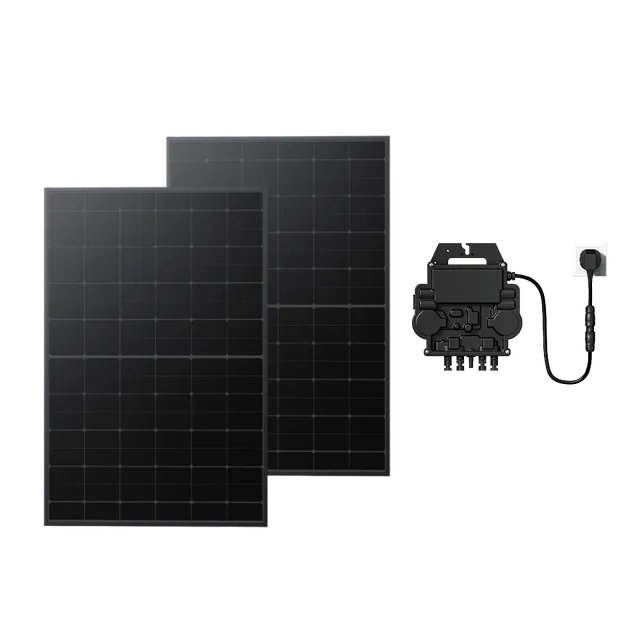
The Zendure Plug and Play Solar Kit with 2x420W panels and microinverter is the simplest entry point. It bundles two 420W panels with a microinverter, so generation and conversion arrive in one box. At 840W of panel capacity, this is a serious small system — in decent sun it can realistically produce 3–4.5 kWh on a good summer day, which covers a meaningful slice of a typical household's daytime usage (fridge, router, laptop work, laundry on a sunny afternoon).
The kit is SolarFlow-compatible, which matters because it means you can add battery storage later without replacing anything.
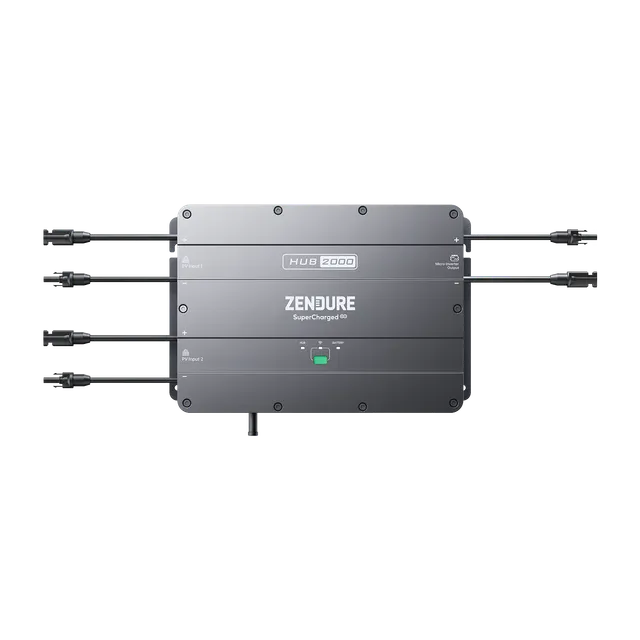
If you want storage and smart energy management, the microinverter alone isn't enough — you need a hub. The Zendure Hub 2000 SolarFlow is an MPPT solar charge controller with a 1,800W output and support for up to 2,400W of solar input. In plain terms: it takes the DC power from your panels, optimizes it with MPPT tracking (which squeezes more energy out of the same panels, especially in partial shade or mixed light), and routes it either to your home or into connected batteries.
Plan for headroom. Your Hub 2000's 2,400W solar input leaves room to expand beyond the initial 840W of panels later — many people add two more panels in year two once they've confirmed their roofline or balcony performs well.
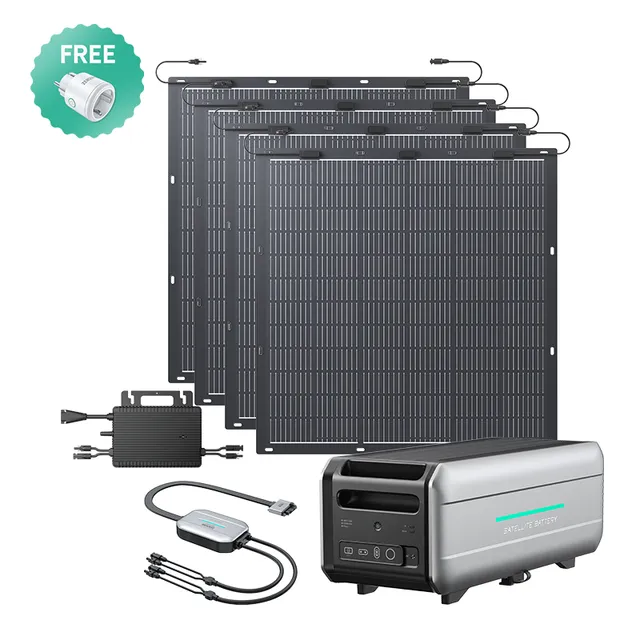
Without storage, your solar savings stop when the sun does — right when you get home and start cooking. Storage fixes that. The Zendure Satellite Battery Balcony Power Plant Set with PVHub Mini is the full modular route: expandable battery storage tied into Zendure's SuperBase V smart energy management, so stored solar gets dispatched to your home automatically when generation drops.
The practical logic: store cheap midday solar, use it during evening peak hours. If you're on a time-of-use tariff — which most major US utilities now push — this arbitrage is where plug-in solar stops being a hobby and starts being a measurable line-item saving.
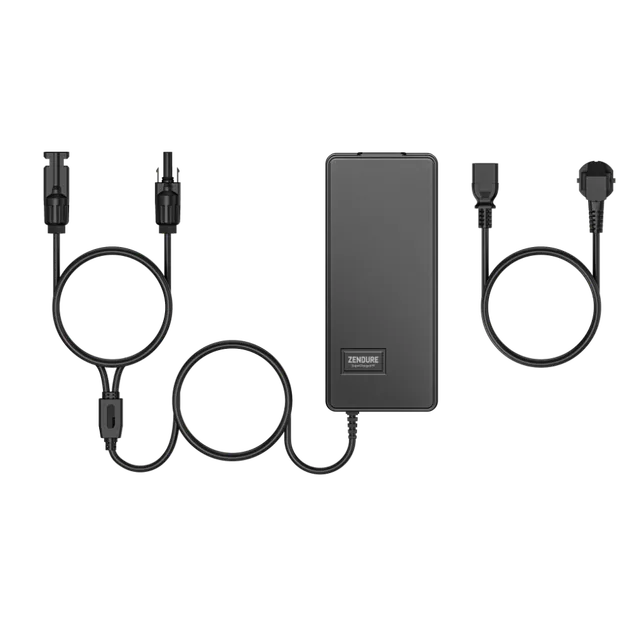
Don't want full storage yet? The Zendure AC to Solar Connector Adapter is a clever intermediate step: it lets a SolarFlow hub charge its battery from a wall outlet at up to 162W. That's useful for pre-charging a battery before cloudy stretches, and it lets you benefit from time-of-use arbitrage (charge at night on cheap rates, discharge during expensive peak hours) even before your panels are producing heavily.
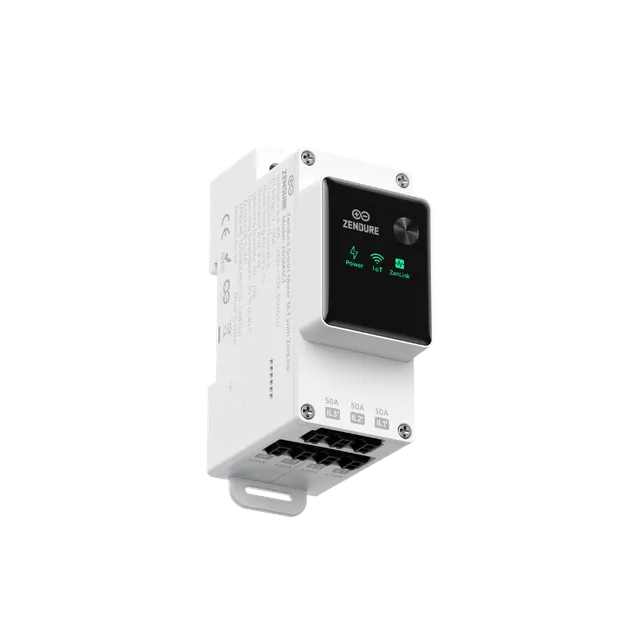
This is the component most first-time buyers skip — and the one that unlocks the ecosystem's real intelligence. The Zendure Smart Meter 3CT uses three clamp sensors to measure your household's total consumption in real time across all circuits. Feed that data to ZEN+ OS and your SolarFlow system stops guessing: it knows whether your home is currently consuming more or less than your panels produce, and it routes power accordingly.
Without a meter, the system runs on estimates. With one, it can dynamically match output to your actual load, avoid unnecessary grid export, and — if you're on a dynamic or time-of-use tariff — shift charging and discharging to the cheapest windows automatically. If you're asking whether the 3CT is worth adding at setup rather than later: it is. Retrofitting means re-running the app configuration and physically re-clamping everything. Do it once, do it now.
Once the hardware is on hand, installation is a half-day project. Here's the sequence that works.
Installation gets you power. Configuration gets you savings. Three settings to get right on day one:
Zendure's ZEN+ AI layer learns your consumption patterns over the first few weeks. The more accurate your meter data, the better its automatic decisions get.
Let's be honest with the numbers, because this is where most marketing falls apart. Two 420W panels in good US sun produce roughly 3.5–5 kWh/day in summer and 1.5–2.5 kWh/day in winter, depending on latitude and weather. At a national average of about $0.17/kWh, that's roughly $18–28 per month in summer and $8–14 in winter — call it $180–280 per year of direct generation savings, before time-of-use optimization, which storage adds on top.
That means a system built around the plug-and-play kit pays for itself over several years, not months. Anyone promising faster is selling something. But the math improves every time you add panels (the Hub 2000's 2,400W input gives you plenty of room), add battery capacity, or face rising utility rates — which, historically, only go one direction.
A Zendure plug-in solar setup is one of the few home energy projects you can genuinely complete yourself in an afternoon: mount the panels, connect the plug-and-play kit, route everything through the Hub 2000, add Satellite Battery storage, and instrument it all with the Smart Meter 3CT. Build it in that order, configure it against your actual tariff, and you'll have a clean, expandable energy system that quietly pays you back for years. The best month to start was the sunniest one — which, if you're reading this in late summer, is the one you're in.
Orders over $45.00 ship free. Otherwise, shipping is $8.00.
Hassle-free returns
SSL encrypted checkout
100% genuine products
Shop chargers and power banks from Baseus, INIU, Zendure, and Native Union — compare specs side by side and order with confidence.
Email: support@ampleaf.shop
Address: Unit 412, 87 Harborview Drive, Portland, OR 97205, United States